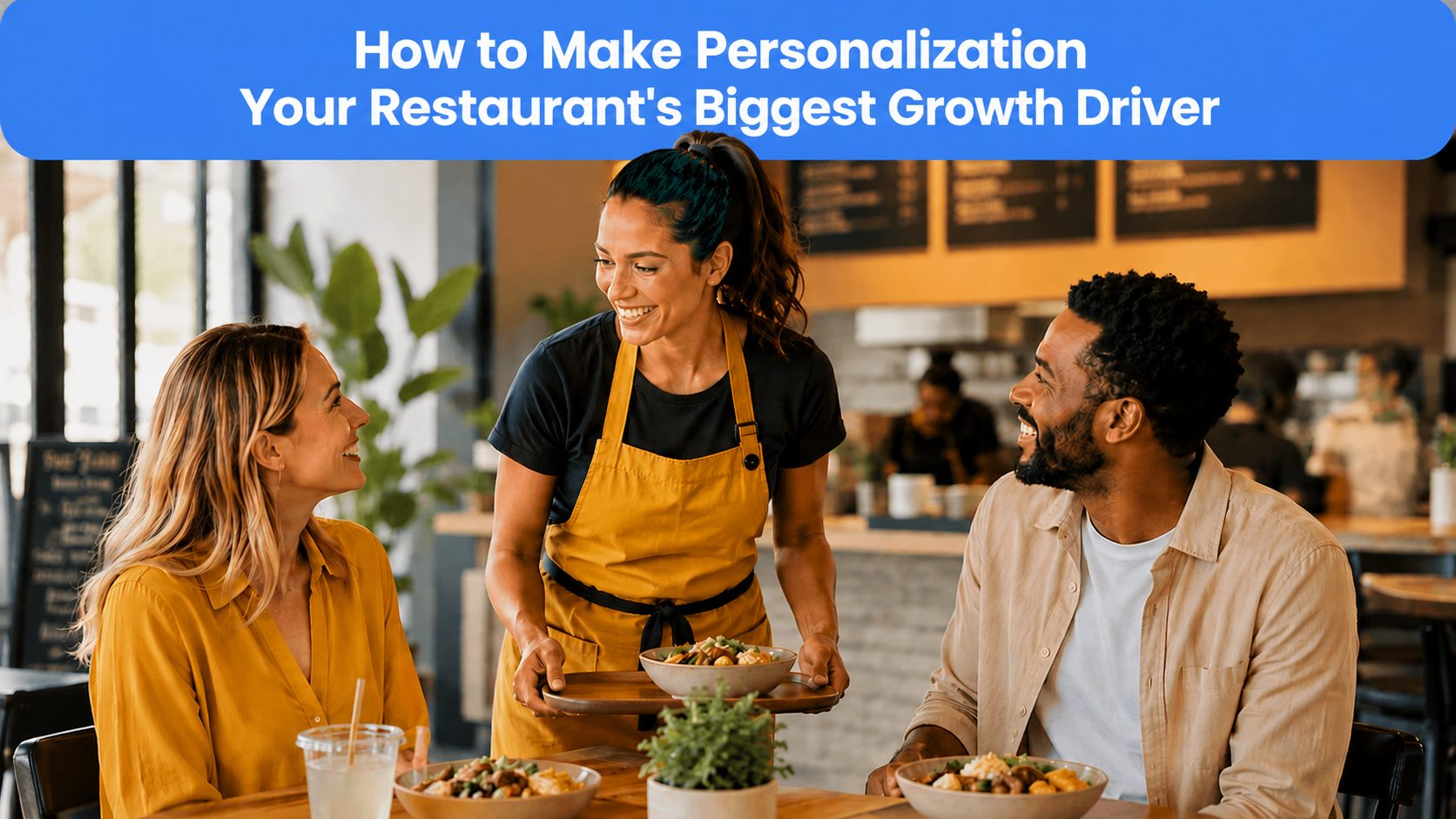
There’s a moment every restaurateur knows. A regular walks in and the server calls them by name, remembers their order, asks about their kid’s soccer tournament. The guest lights up. They feel like they belong there.
That moment is worth more than most restaurants ever stop to calculate.
The problem? Most of what happens after guests leave looks nothing like that interaction. It’s a follow-up that doesn’t quite connect. A response to a negative review that could have come from any brand in any city. A complaint that slipped through the cracks because nobody caught it in time. And a guest who quietly decided not to come back — taking their future spend, their referrals, and their loyalty with them.
This is the personalization gap. And in 2026, it’s getting more expensive to ignore.
Why Personalization Is Now Your Biggest Growth Lever
Guests have always wanted to feel known. What’s changed is how much more possible it is to actually deliver that — and how much operators leave on the table when they don’t.
According to DataDelivers’ 2025 Restaurant Guest Engagement Report, 92% of first-time guests who received no personalized follow-up never returned. Nine out of ten. Gone. Meanwhile, 26% of those who did receive targeted, relevant outreach came back — turning what would have been a one-and-done visit into the beginning of a relationship.
That gap isn’t a rounding error. It’s the difference between building a loyal customer base and constantly starting over.
And it’s not just about follow-up. Guests who receive responses that actually sound like the brand they chose — warm, specific, human — are dramatically more likely to give that brand another chance after a bad experience. Ninety-three percent of new diners read online reviews before choosing where to eat (BrightLocal, 2024). Every generic response your team posts is part of what those diners see.
The hospitality instinct is right. It’s the infrastructure that hasn’t caught up.
The Four Dimensions That Separate Winning Restaurants
Personalization touches every part of the guest relationship — loyalty, email marketing, paid acquisition, and more. The operators pulling ahead are getting it right across four dimensions that drive the fastest, most measurable impact: brand voice, guest feedback, menu intelligence, and real-time visibility.
Brand Voice. Your restaurant has a personality. The way you communicate with guests should reflect it — in every Winback message, every review response, every automated reply. Not a generic template. Not a chatbot that sounds like no one. Your voice, consistent across every location and every interaction, without your team having to start from scratch every time.
Guest Feedback. Guest feedback is one of the most valuable tools a restaurant has. The question is how specific it can get. A guest who ordered the new appetizer can tell you something a general satisfaction survey can’t — and when surveys connect directly to what guests actually ordered, response rates go up, data quality improves, and your team knows exactly what to do with the results.
Menu Intelligence. Most menu decisions still come down to gut feel, because the data needed to make better ones is scattered across systems. Sales in the POS. Sentiment in surveys. Reviews spread across platforms. When that data is unified — and paired with real guest feedback at the item level — the decisions become obvious. Keep the star. Promote the hidden gem. Fix the inconsistent dish. Cut what isn’t working.
Visibility. Operators don’t run their businesses from a desk. By the time a weekly report surfaces a problem, it’s already been a problem for days. The operators catching issues early — and winning back guests before they’ve already made up their minds — are the ones with real-time visibility, wherever they are.
Each of these dimensions matters on its own. But the real advantage comes when they work as a system.
Personalization Compounds
Here’s what most operators miss about this: the return on personalization isn’t linear. It’s a flywheel.
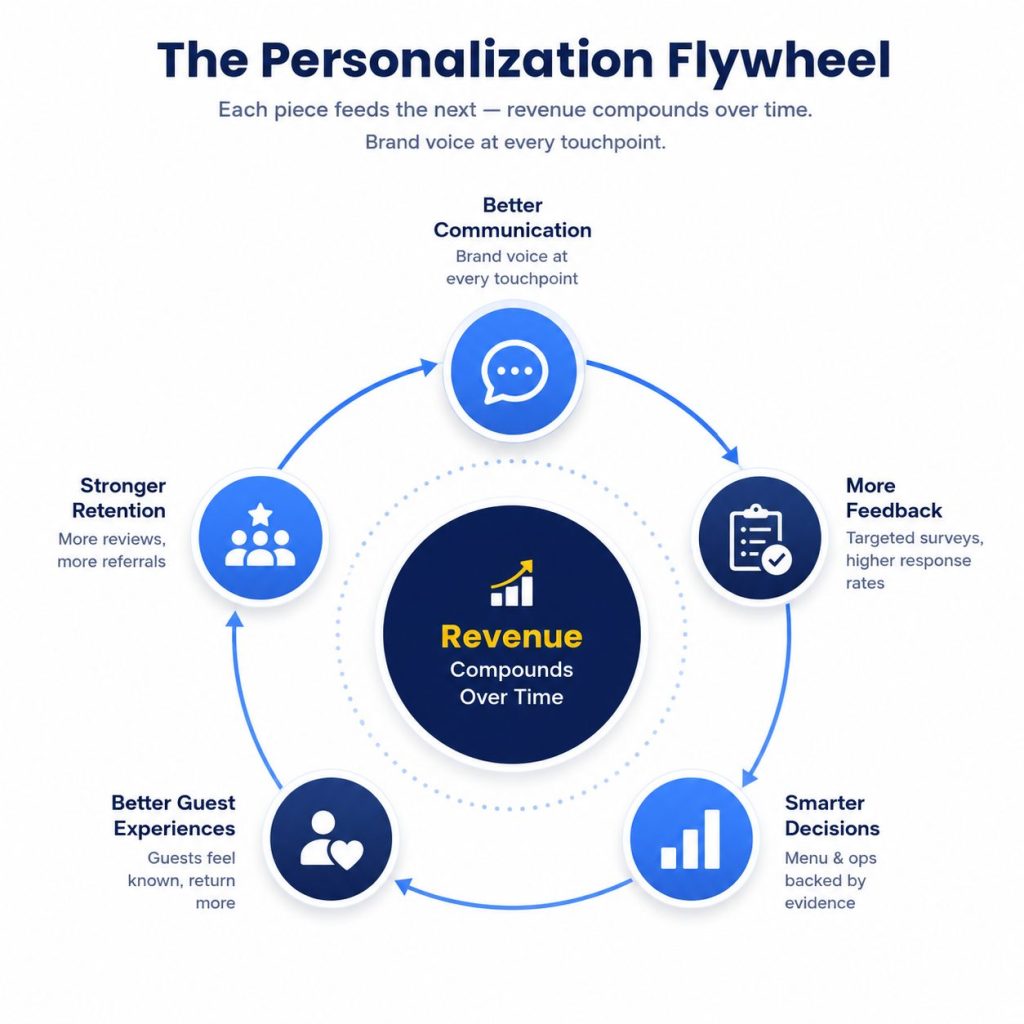
Better communication generates more feedback. More feedback drives smarter menu and operational decisions. Smarter decisions create better guest experiences. Better experiences lead to more guests who feel known — more reviews, stronger retention, more referrals. And at every point in that loop, you can see exactly what the recovered relationships are actually worth in revenue.
That last part matters more than it sounds. Guest recovery has always felt like a hospitality instinct — something good operators do because it’s the right thing to do. What’s changed is the ability to put a number on it. When your team can see that a recovered guest is worth $X in future visits, the sense of urgency around every single interaction changes. It stops being a nice-to-have and becomes a measurable growth strategy.
Ovation customers recover up to 47% of unhappy guests and capture up to 14x more feedback than industry averages, resulting in tens of millions in revenue saved across our customer base. Not by working harder — by working smarter.
Where to Start
The most common question operators ask when they start thinking about personalization is: where do we even begin?
The answer is almost always: with an honest assessment of where you are.
Most restaurants aren’t at the same stage across every dimension. Some have consistent brand voice but no targeted feedback. Some have solid feedback systems but no way to connect that data to menu decisions. Some are doing it all manually and losing ground to teams with better infrastructure.
Knowing your starting point is the first move. And the good news is that you don’t have to overhaul everything at once — targeted improvements in any one of these dimensions will show up in your results quickly.
The Playbook
We put everything above — and a lot more — into a resource built specifically for restaurant operators, marketers, and customer service leads who want to close the personalization gap.
The Personalization Playbook for Restaurants covers the business case for personalization, a practical framework for smarter menu decisions, what targeted feedback actually looks like in practice, and a self-assessment tool to help you figure out exactly where your team stands today.
It’s free. It’s built for the way operators actually think. And it takes about 15 minutes to read.
Download the Personalization Playbook →
Ovation is the AI-powered guest experience platform for restaurants. Ovation’s Spring 2026 release — Personalization That Performs — brings together AI-powered Brand Voice, Menu Item Survey Targeting, Menu Item Performance Report, the Mobile Dashboard, and Estimated Revenue Saved. Learn more.