Quick answer: Restaurants should respond to negative guest feedback within a few hours, and never later than 24 hours. The fastest teams reply while the guest is still in the restaurant or on the drive home. Multi-location brands hold that pace with a written response SLA, automatic escalation when a manager misses it, and a leaderboard that shows which stores respond fastest.
Every restaurant gets complaints. The cold fries, the missing sauce, the 20-minute wait. What separates brands that keep those guests from brands that lose them is simple: how fast someone answers.
We spent the last six months listening to calls with restaurant operators, from pilot kickoffs to quarterly reviews. Response time came up in nearly every one. Not menu. Not staffing. Speed.
Here is what fast-moving brands are doing, and why the clock matters more than the apology.
How quickly should a restaurant respond to a complaint?
Aim for the same shift. Set 24 hours as the ceiling.
The brands we work with set response targets that match how they operate:
- Within minutes: best case. The guest may still be at the table or in the parking lot, so a manager can fix it on the spot.
- Within 12 hours: a common internal SLA for multi-unit brands. It covers late-night feedback without asking GMs to answer at 2 a.m.
- Within 24 hours: the hard limit. After a day, the guest has moved on, told a friend, or posted a review.
Via 313 shows what the top end looks like. Their team regularly sees feedback from guests who are still in the restaurant, so they can make contact at the table instead of sending an offer later. At Houston TX Hot Chicken, most responses go out in under 24 hours, often within minutes.
Why does response speed bring guests back?
An unhappy guest is still deciding whether to return. A fast reply catches them before that decision is made.
According to Ovation data, responding to an unhappy guest more than doubles the likelihood they’ll return: 47% come back when they receive a response, compared to just 20% when their issue goes unanswered. The response itself is the recovery. The offer helps, but the reply is what reopens the door.
Speed also changes the conversation. A reply within the hour feels like hospitality. A reply three days later feels like a form letter. Operators told us the same thing again and again: once response times slipped, recovery rates slipped with them.
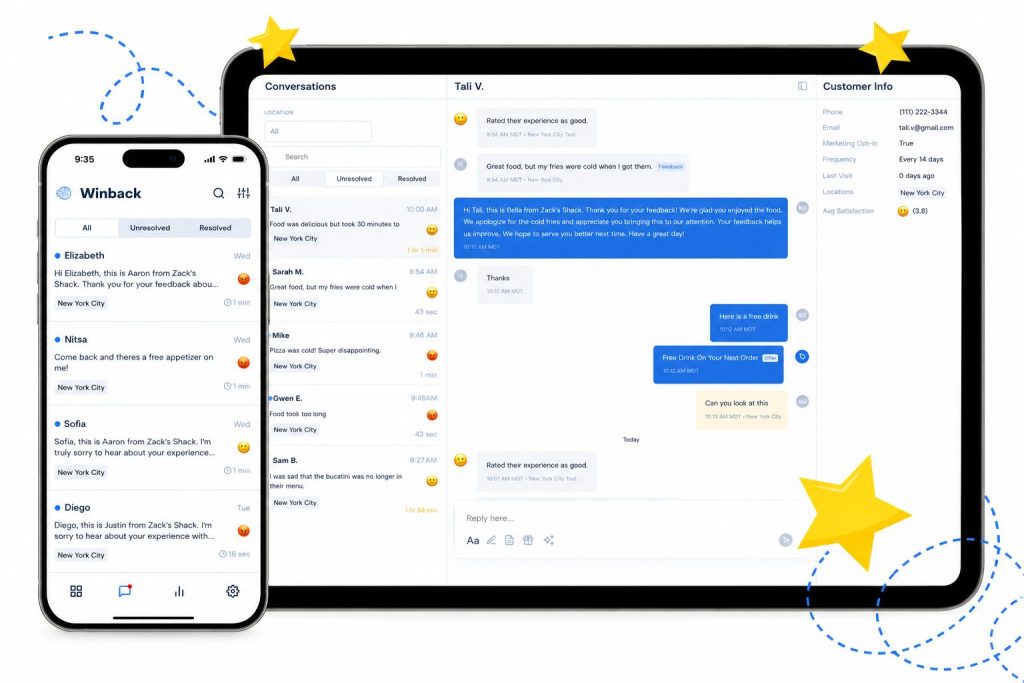
That is why Ovation’s real-time guest recovery pushes feedback to managers the moment it arrives. WinBack opens a two-way text conversation, so the guest can reply from their phone instead of filling out another form.
How do multi-location restaurants keep response times fast?
One fast GM is easy. Thirty fast GMs takes a system. Across our calls, the brands with the best response times used the same five moves.
- Write the SLA down. Pick a number, such as 12 hours, and make it a KPI. Brands that treated response time as optional saw it drift. Brands that tied it to ops reviews held it.
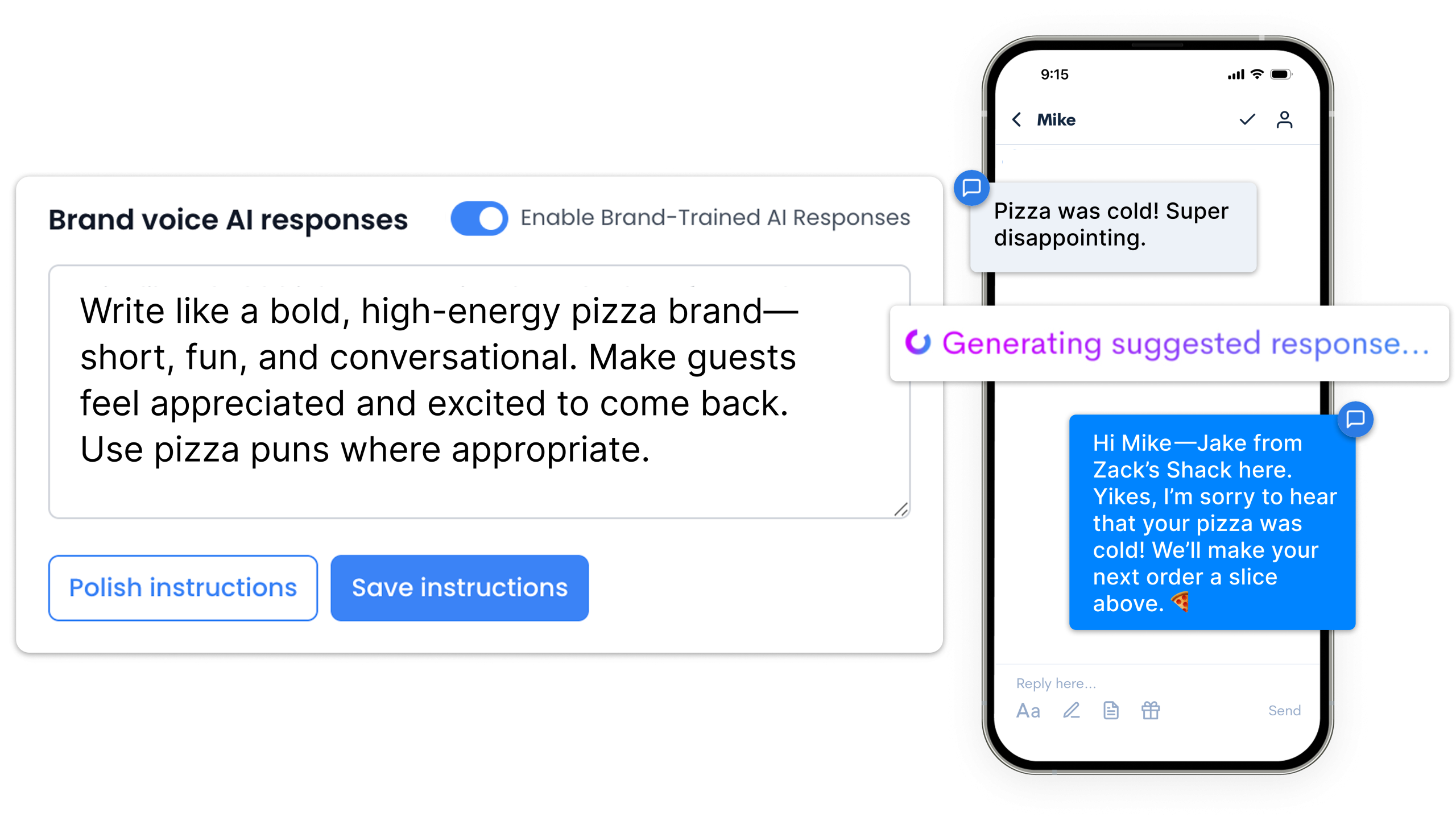
- Let AI write the first draft. The slowest part of a reply is staring at a blank text box. Ovation’s AI-suggested responses draft a reply the moment feedback arrives, so a GM can review, tweak, and send in seconds. Most brands keep a person approving every reply.
- Teach the AI your brand voice. A fast reply that sounds like a robot does more harm than good. Brands told us their early AI drafts ran long and opened with generic lines. Tuning Ovation’s Brand Voice settings fixed that: shorter replies, specific details from the guest’s feedback, and the tone their guests expect, at every location.
- Escalate automatically. If a GM misses the window, the feedback goes to a district manager or a hospitality director. Ovation’s escalation rules handle the handoff, so no one has to chase it.
- Make it visible and give one person ownership. A response leaderboard shows which stores answer fastest, and some brands spotlight top responders in internal newsletters. Whether it is the GM, a central guest services team, or a franchise owner, someone’s name is on every response. Shared ownership usually means no ownership.
Franchise systems face the toughest version of this problem. Corporate stores often respond within hours while newer franchisees lag. Role-based access and escalation rules let corporate see every location without answering for every location.
Houston TX Hot Chicken gives managers a fast, structured way to reach guests across corporate and franchise stores.
How do you measure whether faster responses pay off?
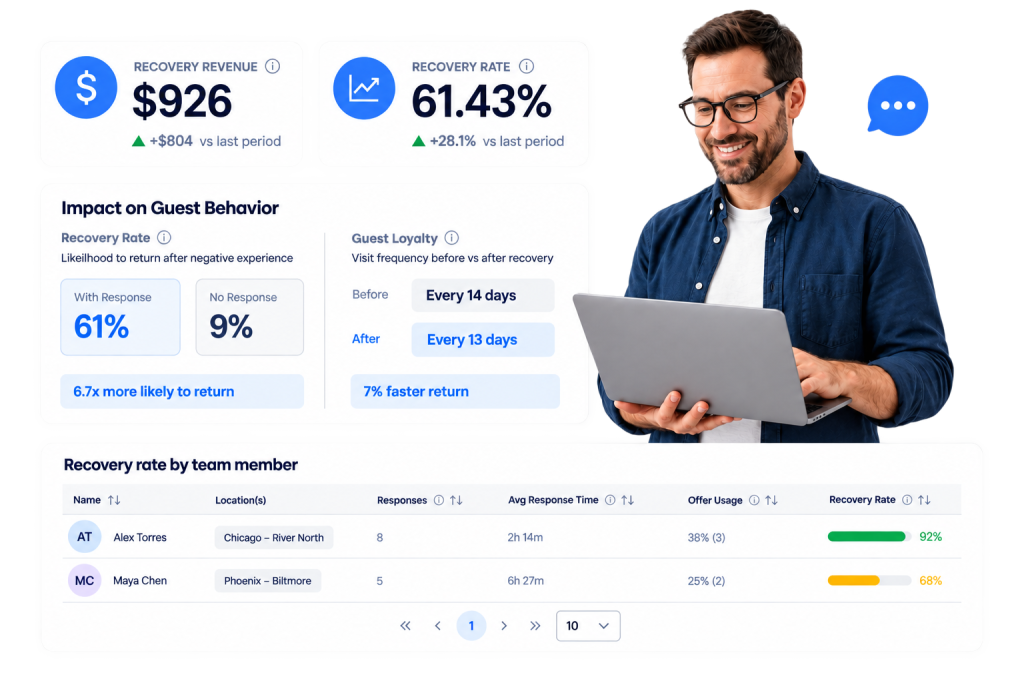
Track three numbers by location: response rate, average response time, and guests who come back after a response.
The Guest Recovery Dashboard puts all three in one view. It shows recovered revenue, return rates for guests who got a reply, and which recovery offers actually bring people back. That turns response time from a hospitality habit into a number your CFO cares about.
Want to see it in practice? In The ROI of Guest Recovery for Restaurants, Newk’s Eatery walks through how they measure recovery across their locations. The on-demand webinar is free to watch.
The clock starts the moment a guest hits send. Brands that answer fast keep guests other brands lose.
Frequently Asked Questions
How fast should a restaurant respond to a negative review or complaint? Within a few hours, ideally the same shift. Set 24 hours as the maximum for private feedback and public reviews alike.
What is a good response rate for restaurant guest feedback? Aim to respond to every piece of negative feedback. Multi-location brands typically track response rate by store and escalate when it drops.
Who should respond to guest complaints at a restaurant chain? The GM of the location in most cases, since they can fix the root cause. Some brands use a central guest services team instead. Either way, one named owner per response works best.
What should a restaurant say when responding to a complaint? Thank the guest, name the specific issue, and offer a clear next step. Keep it short and personal. An offer to return can help, but the reply matters most.
Can AI help restaurants respond to feedback faster? Yes. AI can draft replies in your brand voice so managers edit and send in seconds. Most brands keep a person approving each reply.